
Discussions around cybersecurity in critical infrastructure (KRITIS / CNI) are typically dominated by topics like SCADA environments, firewall clusters, zero-trust data center architectures, and intrusion detection systems.
Yet, day-to-day operations and maintenance reveal a very different reality: service technicians, field engineers, and external contractors work on-site every single day – at substations, utility corridors, pumping facilities, and civil engineering sites. On their laptops and mobile Windows PCs, they carry the exact data that central data centers work so hard to shield:
- High-resolution grid, network, and route maps
- Precise geographic coordinates of underground supply lines and pipelines
- Topology layouts and configurations of switchgear stations and industrial control systems
- Maintenance records containing known vulnerabilities and local access credential
The moment one of these devices leaves the secure enterprise perimeter, the confidentiality of the entire operational infrastructure is exposed.
You can’t rely on perimeter security
Within corporate facilities, strict physical and digital access controls apply. In the field, however, a single lapse in attention is all it takes: a laptop left unattended in a service van, equipment stolen from a construction site, or a missing bag at a train station.
When an endpoint goes missing, CISOs and IT security managers face critical questions:
- What data was actively cached or stored locally on that machine?
- Was full-disk encryption active and effective at the exact moment of loss, or was the device merely in standby/sleep mode?
- Can the incident be thoroughly documented and verified for auditors, regulatory bodies, and compliance authorities?
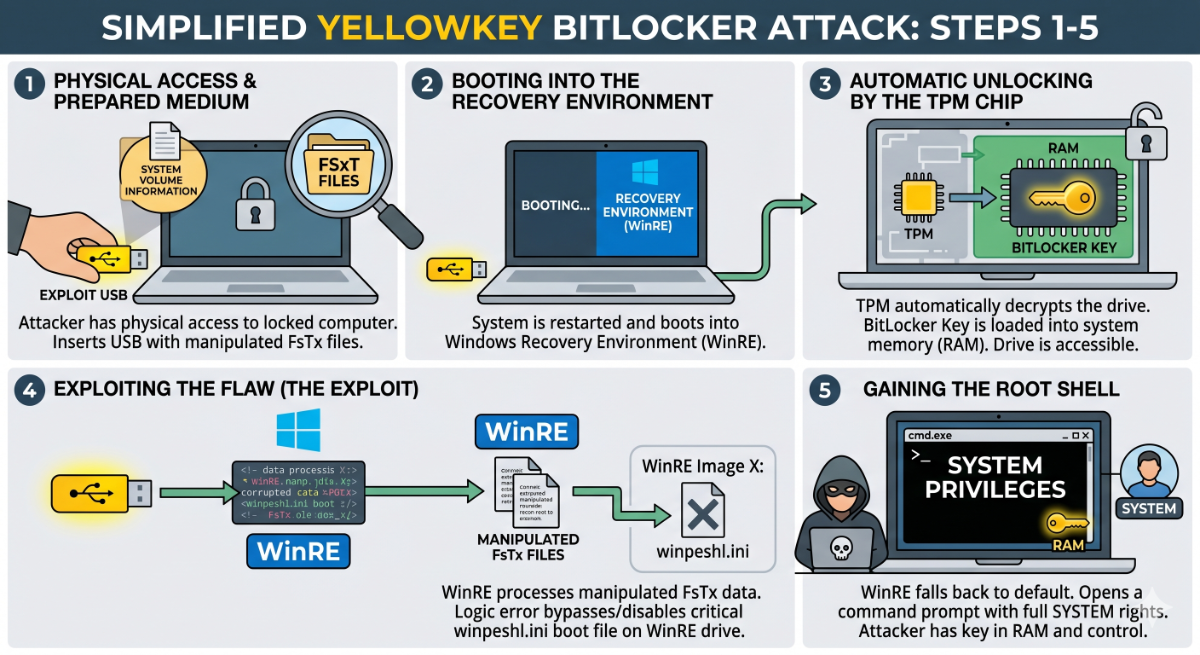
This reveals a common compliance dilemma: while network traffic and access events are logged down to the second, the verified security posture of mobile Windows endpoints during physical loss remains a complete black box.
Moving from Security Risk to Proof of Compliance
Under modern regulatory frameworks such as NIS-2, updated national cybersecurity legislation, and strict critical infrastructure standards, pointing to “installed disk encryption software” is no longer sufficient. Operators face a strict burden of proof:
- Auditability: Proof of implemented, functioning protective measures must be verifiable at all times.
- Rapid Response: When an incident occurs, teams must be able to immediately prevent data extraction or key harvesting.
- Centralized Verification: Organizations require a tamper-proof audit trail documenting the device state and lock enforcement.
Without centralized control and provable protection for field endpoints, organizations face more than data leakage that could endanger supply security—they face severe regulatory penalties and failed compliance audits.
Targeted Protection for Critical Endpoints with Unlock Anywhere®
This is precisely where Unlock Anywhere® delivers value. The platform bridges the gap between physical endpoints deployed in the field and the central governance policies mandated by IT security leadership.
- Immediate Incident Response: If a device is misplaced or stolen, administrators can instantly and reliably restrict access remotely (Remote Lock).
- Persistent Data-at-Rest Security: High-value data assets such as utility maps, pipeline blueprints, and access keys remain entirely inaccessible—even if an attacker gains physical possession of the hardware.
- Transparency & Auditability: Every status change, policy trigger, and remote lock command is documented in an audit-proof log. Organizations can unequivocally demonstrate to regulators and auditors that unauthorized access was prevented.
- Frictionless Field Operations: The everyday workflows of field technicians and engineers remain unhindered; robust security runs reliably, centrally managed in the background.
Conclusion: Critical Infrastructure Resilience Demands Endpoint Control
Mobile endpoints carrying sensitive infrastructure telemetry and blueprints are not peripheral IT concerns—they represent one of the most exposed attack surfaces in modern utility networks.
Operating critical infrastructure requires more than securing central networks; it demands making the physical loss of endpoints manageable, controllable, and auditable.
Ensure your critical endpoints are audit-proof and resilient
Evaluate the remote-lock workflow and comprehensive protection model of Unlock Anywhere® with a free 45-day trial, or request our technical solution overview today.